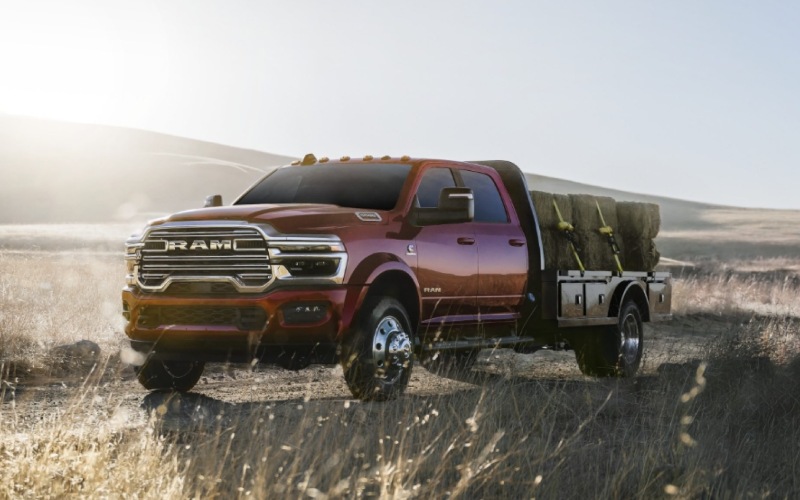
Morgan Hill Ram - Which Engine Fits San Jose, CA Routes on a 2026 RAM 5500 Chassis Cab?
Choosing the right engine for your 2026 RAM 5500 Chassis Cab comes down to the routes and loads you face around San Jose, CA, and how you plan to upfit the truck for your business. At Morgan Hill Chrysler Dodge Jeep Ram, we help local fleets and owner-operators spec the 5500 to thrive in real traffic, real grades, and real job-site constraints from downtown San Jose to the South Bay and beyond.
The 2026 Ram Chassis Cab lineup offers two formidable powerplants. The available 6.7L Cummins® Turbo Diesel I6 delivers 360 maximum horsepower, 800 pound-feet of maximum torque, and a maximum trailering capacity of 34,540 pounds. The available 6.4L HEMI® V8 offers 375 maximum horsepower, 429 pound-feet of maximum torque, and a maximum trailering capacity of 21,240 pounds. Both are proven choices for hard work, but they excel in different duty cycles. Below, we translate those numbers into day-to-day advantages on the 101, 880, 680, and Highway 17 corridors so you can select the best fit with confidence.
How to Match Your Routes and Loads to the Right Engine
Before you lock in your build, map the truck to your real-world tasks. Use these quick cues to align your work with the engine that will serve you best around San Jose, CA.
- Frequent stop-start deliveries: If you run lighter bodies and spend the day in city grid traffic from North San Jose to Willow Glen, the 6.4L HEMI® V8’s strong horsepower and crisp response help you get up to speed smoothly between lights while keeping the truck feeling lively without a heavy trailer.
- Heavy trailers on steep grades: Pulling equipment up Highway 17 or negotiating the Sunol Grade with regular high-weight trailers favors the 6.7L Cummins® Turbo Diesel I6. Its abundant low-rpm torque supports controlled launches on inclines and confident merging with a full load.
- Long freeway hauls: If your routes stretch up and down US-101 or I-680 with steady-state speeds and consistent trailering, the 6.7L Cummins® Turbo Diesel I6 pairs its torque with a higher maximum trailering capacity for dependable pull and fewer downshifts when traffic opens up.
- Mixed weights, varied drivers: Crews rotating between light service calls one day and moderate towing the next may appreciate the 6.4L HEMI® V8’s predictable, linear feel when loads fluctuate and multiple drivers share a single unit.
- Precision maneuvering with heavy bodies: Service, dump, or utility bodies that push close to gross weight are typically better matched with the 6.7L Cummins® Turbo Diesel I6, leveraging that 800 pound-feet of torque for smooth low-speed control in downtown loading zones and tight job sites.
- Occasional towing, mostly payload: If you primarily carry tools and materials and only hitch a trailer occasionally, the 6.4L HEMI® V8 provides robust power and confident acceleration without the daily need for maximum trailering capacity.
Neither choice is “wrong” for Bay Area work. Your best match depends on your heaviest realistic day, your most common day, and the body you plan to install. Our team builds around that triangle so the 5500 feels right-sized in every shift.
Real-World Scenarios Around San Jose
Many San Jose routes force a truck to be both nimble and strong. For example, a landscaping or lighting contractor handling multiple downtown stops may favor the 6.4L HEMI® V8 for its responsive acceleration when darting between jobs off Santa Clara Street or through The Alameda. With a lighter upfit and minimal trailering, that extra horsepower can keep your day moving smoothly.
Contrast that with equipment hauls out of South San Jose, where you climb toward Los Gatos or navigate I-880 merges under load. The 6.7L Cummins® Turbo Diesel I6’s torque advantage becomes tangible in those on-ramp moments and longer pulls. When you’re maxed out on trailer weight, the diesel’s higher maximum trailering capacity stacks the deck in your favor.
Safety and visibility matter in either case. Available Adaptive Forward Lighting helps illuminate winding, darker approaches and early-morning starts, while available Forward Collision Warning adds confidence in dense, stop-and-go traffic on 101 and 87. Inside the cab, the available high-definition 12-inch Uconnect® touchscreen helps your crew stay oriented with clear navigation, available camera views, and simple device integration, which is especially useful when jobs are spread from North San Jose into Fremont or down into Morgan Hill.
Spec Notes We Walk Through With Every 5500 Order
Great engine choice is part of a broader build conversation. When we sit down to spec your 2026 RAM 5500 Chassis Cab, we walk through a consistent checklist to dial in performance, upfit readiness, and job-site practicality.
- Gross weight and trailering needs: We review your heaviest planned days, confirm the engine’s maximum trailering capability, and reference the Ram Body Builder’s Guide for GCWR, payload, and axle considerations.
- Upfit type and dimensions: Flatbed, service body, dump, or box — we map the body to cab-to-axle and wheelbase needs so the truck turns where you work and carries what you need.
- Route profile and grades: We account for steep segments like Highway 17 and recurring expressway merges, then align gearing and engine torque with those realities.
- Crew comfort and cab tech: We consider the available 12-inch Uconnect® system, storage solutions, and seating that keep long shifts productive.
- Lighting and visibility: We evaluate operating hours and job-site conditions to determine if available Adaptive Forward Lighting is a smart addition.
- Service and uptime plan: We outline maintenance intervals and coordinate with our service department so the truck’s build supports quick access and minimal downtime.
This process keeps the conversation grounded in your routes, your loads, and your people — the factors that ultimately decide which engine feels effortless on the job.
Engine Snapshot: Quick Comparison
Here is a concise view of how the two available engines stack up based on Ram’s published specifications for the 2026 Ram Chassis Cab.
- 6.7L Cummins® Turbo Diesel I6: 360 maximum horsepower, 800 pound-feet of maximum torque, maximum trailering capacity of 34,540 pounds.
- 6.4L HEMI® V8: 375 maximum horsepower, 429 pound-feet of maximum torque, maximum trailering capacity of 21,240 pounds.
Remember, ratings and capabilities can vary with configuration, axle ratios, and upfit weight. When we build your truck, we validate the full picture using the Ram Body Builder’s Guide and ensure your selected engine, wheelbase, and body work together smoothly.
Next Steps for San Jose, CA Buyers
The best way to finalize your decision is to sit down with our commercial specialists and walk through your duty cycle. Bring sample weights, typical routes, and upfit ideas — we will translate them into a build that makes sense. If you want to experience how each engine feels, we can arrange a drive in comparable units where available and talk through towing strategies for Bay Area traffic patterns.
Visit Morgan Hill Chrysler Dodge Jeep Ram at 17085 Condit Rd, Morgan Hill, CA 95037. Call our Sales team at 408-669-4252 to schedule a commercial consultation. From engine selection to upfit coordination, we will help you build a 2026 RAM 5500 Chassis Cab that works as hard as you do — on city streets, steep grades, and everything in between.
Frequently Asked Questions:
Which engine fits San Jose, CA routes on a 2026 RAM 5500 Chassis Cab?
If you regularly tow at higher weights or climb steep grades like Highway 17, the available 6.7L Cummins® Turbo Diesel I6 offers abundant low-end torque and the higher maximum trailering capacity to keep you confident. If your loads are lighter and your day is mostly stop-start driving in city traffic, the available 6.4L HEMI® V8 delivers strong horsepower and responsive acceleration that feel right at home between lights and short hops.
How do the available safety and visibility features help in Bay Area traffic?
Available Forward Collision Warning can provide alerts to help you react in dense, stop-and-go conditions on 101, 880, and 87, while available Adaptive Forward Lighting can improve illumination on curving roads and early-morning starts. These features complement the 5500’s work-first design to reduce driver strain during long shifts.
Can you help me verify payload, GCWR, and upfit compatibility before I order?
Yes. We reference the Ram Body Builder’s Guide to validate payload, GCWR, axle ratings, electrical interfaces, and dimensional requirements. We will align your body selection — flatbed, service, dump, or box — with the correct cab-to-axle and wheelbase, then confirm it pairs properly with your chosen engine.
What’s the smartest way to plan trailer weight for Bay Area grades?
Use your heaviest realistic trailer-and-cargo combination as the baseline, confirm configuration-specific ratings in the Ram Body Builder’s Guide, and keep a reasonable margin under your maximum rating for grades, heat, and stop-start congestion. Our team can help you validate real-world weights and match them to the correct 5500 configuration.