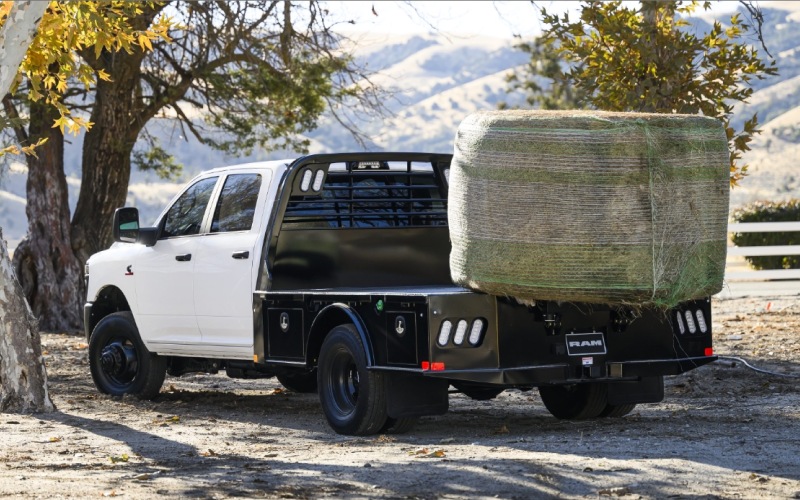
Morgan Hill Ram - How Body Builder's Guide Data Supports 2026 Ram 5500 Chassis Cab Upfits for Salinas, CA Work Crews
For many commercial shoppers, the most important question is simply not whether a truck is powerful, it is whether the truck is the right tool for the job. That is where the 2026 Ram 5500 Chassis Cab stands out. Built as a serious commercial platform, it gives businesses the strength, flexibility, and upfit-focused design needed to support service bodies, flatbeds, dump bodies, utility configurations, and other specialized work applications. Around Salinas, CA, where agricultural operations, construction support, maintenance routes, and equipment-heavy trades often overlap, the right chassis cab can become the backbone of daily productivity. The Ram Chassis Cab is engineered to work hard, but its real advantage is how thoughtfully it can be adapted to different missions.
One of the most valuable resources for commercial buyers and upfitters is the Ram Body Builder's Guide. This guide contains key technical information including safety, security, towing, payload, GCWR, emissions and electrical data, along with dimensional graphics that help upfitters determine model selection for individual and commercial modifications. In plain terms, it helps turn an idea into a properly planned truck. Instead of guessing whether a chassis will support a certain body, electrical layout, or duty cycle, the guide gives upfit professionals a clearer foundation for decision-making. At Morgan Hill Chrysler Dodge Jeep Ram, serving Pacific Grove, Seaside, and Salinas, we understand that a commercial truck is not finished when it arrives from the factory. For many businesses, the real value starts when the right body and equipment are matched to the right chassis.
Why Upfit Planning Matters Before You Buy
A chassis cab purchase should begin with the finished truck in mind. If your business needs a crane body, service bed, dump body, stake bed, flatbed, or enclosed utility solution, the chassis must be selected with weight distribution, payload, trailering demands, and electrical needs already considered. The 2026 Ram 5500 Chassis Cab is built to be versatile and durable, with an exterior that is easily upfitted and designed to tow and haul heavy loads. That upfit-friendly foundation matters because the wrong configuration can limit performance, reduce efficiency, or make future modifications more complicated than necessary.
Planning early also helps avoid common commercial-truck mismatches. A buyer may focus only on engine output, but upfit success depends on much more than horsepower and torque. Wheelbase, body length, axle considerations, electrical integration, cargo weight, trailer use, and crew needs all shape the final recommendation. The Ram Body Builder's Guide helps provide technical clarity for upfitters, while a professional dealership consultation helps connect that information to the real business case. For example, a mobile mechanic may need lockable storage, onboard power considerations, and trailer capability. A landscape business may prioritize dump capability, tool storage, and payload. A municipal contractor may need lighting, safety equipment, and a durable service body. Each use case points toward a different build strategy.
Powertrains That Support Serious Commercial Builds
The 2026 Ram Chassis Cab offers two available engines, and each brings a distinct advantage depending on how the truck will be used. The available 6.7L Cummins® Turbo Diesel I6 engine delivers 800 pound-feet of maximum torque, 360 maximum horsepower, and a maximum trailering capacity of 34,540 pounds. For businesses that tow heavy trailers, move equipment, or need low-speed pulling strength, that torque can be a major benefit. Diesel power is often selected by operators who expect frequent hauling, demanding grades, and long service life under heavy loads.
The available 6.4L HEMI® V8 engine offers 429 pound-feet of maximum torque, 375 maximum horsepower, and a maximum trailering capacity of 21,240 pounds. This gas-engine option may be a smart fit for businesses that need strong capability but do not require the maximum trailering strength of the diesel. It can suit many service, delivery, maintenance, and utility applications where responsiveness, simplicity, and payload-focused operation are priorities. The key is not choosing the biggest number on paper. The key is choosing the engine that best matches daily work, upfit weight, trailer expectations, and long-term maintenance preferences.
How the Body Builder's Guide Helps Upfitters
The Ram Body Builder's Guide is especially useful because upfitters need accurate, model-specific data before adding commercial equipment. A work truck may require additional electrical systems, specialized lighting, tool storage, lift equipment, hydraulic components, or reinforced body structures. The guide provides dimensional graphics and technical data that help professionals understand how to build around the chassis correctly. This can help reduce delays, improve compatibility, and create a final truck that performs as intended.
- Dimensional planning: Upfitters can review vehicle measurements that influence body size, mounting points, and equipment layout.
- Electrical data: Commercial equipment often depends on proper electrical integration, making accurate system information essential.
- Towing and payload information: These figures help match the chassis to the expected load, trailer, and body combination.
- GCWR details: Gross Combined Weight Rating data helps clarify total vehicle and trailer planning for demanding work.
- Emissions considerations: Commercial builds must account for emissions-related requirements and equipment placement.
For a business owner, this level of detail can make the buying process more transparent. You do not need to become an engineer, but you do benefit from working with professionals who understand why this data matters. A chassis cab is a platform, and the best platform is the one that supports the finished work truck without compromise. When an upfit is planned with the right information from the beginning, the result can be cleaner, more capable, and better suited to long-term use.
Cab Technology That Helps Crews Stay Organized
Capability outside the cab is only part of the story. Inside, the 2026 Ram Chassis Cab offers heavy-duty materials and ample interior storage options, both of which matter for work crews who carry devices, documents, safety gear, tools, and personal items. A commercial cab needs to be durable, but it also needs to help the operator stay organized. The available high-definition 12-inch Uconnect® touchscreen gives the interior a modern, practical interface, while smart available cabin technology can support daily efficiency as drivers move between jobs and routes.
For Salinas-area work crews, that blend of technology and toughness can be useful across a wide range of industries. A foreman may need quick access to route information and communications. A service technician may use the cab as a mobile office between appointments. A fleet operator may value consistent cabin layouts across multiple vehicles to simplify driver training. The Ram Chassis Cab interior is not just a place to sit between jobs. It is part of the work environment, and its storage, materials, and technology help make the truck easier to live with during long, demanding days.
Safety and Confidence for Commercial Routes
Work trucks often operate in complex environments: jobsites, supplier yards, rural roads, crowded service areas, and trailer staging locations. The 2026 Ram Chassis Cab offers available safety and security features such as Adaptive Forward Lighting and Forward Collision Warning, giving crews additional support during daily driving. These systems can be especially helpful when operators are managing large commercial bodies, tool loads, trailers, and frequent stops. While skill and awareness remain essential, smart available safety technology can add confidence to the overall driving experience.
That confidence becomes even more important when the truck is part of a business reputation. A well-equipped commercial vehicle reflects professionalism before the first tool is unloaded. Customers notice when a work truck looks properly configured, arrives prepared, and supports the job efficiently. For business owners, a thoughtfully planned Ram 5500 Chassis Cab can help support productivity, crew confidence, and brand image at the same time.
Frequently Asked Questions:
Is the 2026 Ram 5500 Chassis Cab good for custom commercial bodies?
Yes. It is built with an upfit-friendly exterior and supported by the Ram Body Builder's Guide, which helps upfitters review technical data for commercial modifications.
Which engine is better for heavy towing?
The available 6.7L Cummins® Turbo Diesel I6 is the stronger choice for maximum torque and trailering capacity, especially for businesses that tow heavy equipment regularly.
Does the gas engine still offer serious capability?
Yes. The available 6.4L HEMI® V8 delivers strong horsepower and torque for many commercial uses, including service, utility, and payload-focused applications.
Why should I review upfit needs before choosing a truck?
Upfit weight, electrical demands, body dimensions, trailer use, and payload requirements can all affect which configuration makes the most sense for your business.
The 2026 Ram 5500 Chassis Cab is more than a powerful truck. It is a flexible commercial platform that can be shaped around the way your business operates. With available Cummins® Turbo Diesel strength, available HEMI® V8 capability, durable interior materials, useful storage, available Uconnect® technology, and support from the Body Builder's Guide, it gives work crews a strong starting point for a smarter build. For Salinas, CA businesses that depend on the right equipment every day, choosing the right chassis cab is an investment in uptime, capability, and professional confidence.