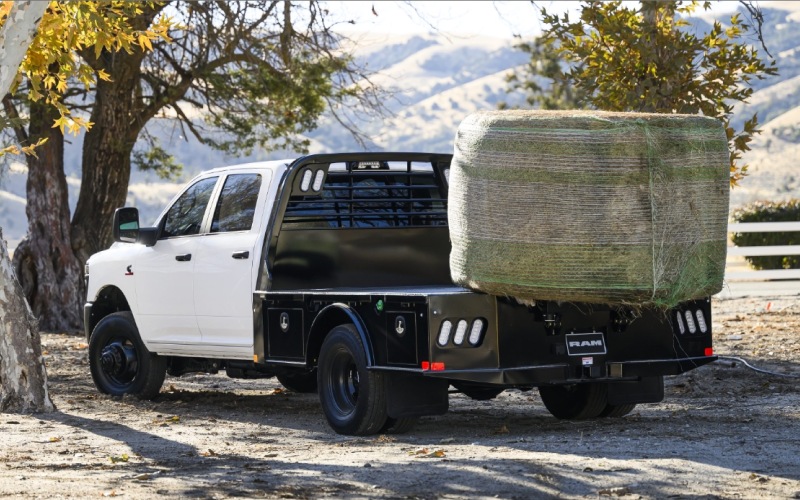
Morgan Hill Ram - Can a 2026 Ram 5500 Chassis Cab tow 20,000 lb over Highway 17 near Santa Cruz, CA?
For crews and owner-operators who regularly pull equipment between the Santa Cruz coast and the South Bay, Highway 17 is the test that matters. The question is whether a 2026 Ram 5500 Chassis Cab can confidently tow a 20,000-pound trailer over this steep, curving mountain pass—and how to spec the truck so it does the job safely, day after day.
In short, a properly configured 2026 Ram 5500 Chassis Cab is absolutely up to the task. The 6.7L Cummins® Turbo Diesel I6 offers 800 pound-feet of maximum torque, 360 maximum horsepower and a maximum trailering capacity of 34,540 pounds. The available 6.4L HEMI® V8 delivers 429 pound-feet of maximum torque, 375 maximum horsepower and a maximum trailering capacity of 21,240 pounds. That means a 20,000-pound trailer falls within the published maximum trailering for both available engines when the truck is configured and equipped correctly. The key is matching your build, hitch type and body upfit to your real-world route—especially Highway 17’s grades and traffic patterns.
Why Highway 17 changes the towing conversation
Highway 17 compresses steep grades, tight radii and fast-changing traffic into a relatively short climb and descent between Scotts Valley and Los Gatos. On a busy afternoon, you may climb slowly in the right lane, then suddenly need strong, predictable braking as curves tighten near the Summit. That’s why our team focuses not just on maximum trailering numbers, but on how the Ram 5500 delivers control, cooling and confidence in stop-and-go uphill traffic and on long, steady descents.
Diesel or gas for a 20,000-pound trailer on 17?
Both 2026 Ram Chassis Cab engines can be configured to pull 20,000 pounds, but the use case matters. The 6.7L Cummins® Turbo Diesel I6’s 800 pound-feet of maximum torque helps keep momentum on grades and reduces downshifts when you’re crawling behind slow traffic. If you tow heavy several days a week and often cross the Summit, we typically guide customers toward the diesel for grade performance and reserve capacity. If your 20,000-pound pulls are infrequent and your upfit keeps combined weights conservative, a 6.4L HEMI® V8 build can still be an excellent fit—provided the hitch, axle ratio and body selection align with the published capacities.
A quick reminder on numbers: published maximum trailering values depend on configuration, hitch type and ratings across the entire combination. The Ram Body Builder’s Guide details GCWR (Gross Combined Weight Rating), dimensional data and electrical provisions that influence final tow ratings. We use that guide as our blueprint when we walk your build from idea to job-ready truck.
Tongue weight, payload and upfit math you should do first
At 20,000 pounds, tongue or pin weight is where many builds stumble. Plan for approximately 10 to 15 percent of total trailer weight as tongue (bumper-pull/gooseneck) or pin (fifth-wheel) weight. That load lands on the truck and counts against available payload after your cab, wheelbase, fuel, passengers, tools and body upfit are considered. A steel flatbed, service body or crane body changes the equation quickly. Before you finalize paint or shelving, we help you balance body weight, axle ratings and trailer choice so your truck’s final scale weight supports the tongue or pin load you’ll carry on 17 without exceeding ratings.
It also pays to confirm real weights. We encourage customers to do a scale check of their fully loaded trailer and typical truck loadout at an area CAT scale. A 10-minute stop can save time and stress later, and it validates that your combination matches the numbers we planned together.
Cab tech and safety features that add confidence
Inside the cab, your crew will appreciate the high-definition 12-inch Uconnect® touchscreen for clear mapping and quick access to settings. Available safety and security features like Forward Collision Warning and Adaptive Forward Lighting add awareness when traffic checks up unexpectedly near the Summit or visibility drops at dawn and dusk. Combine these with a disciplined downhill strategy and you’ll keep the rig composed from Bear Creek Road to the Lexington Reservoir curves.
Before you head out with 20,000 pounds on the hook, a focused pre-trip helps you anticipate Highway 17’s demands. We recommend the simple checklist below so you go uphill and downhill with the right margin.
- Trailer weight verified: Confirm your loaded trailer weight and balance at a local scale—do not guess.
- Hitch type matched: Use the correct gooseneck, fifth-wheel or heavy-duty receiver rated at or above your trailer’s loaded weight.
- Load distribution set: Target 10 to 15 percent tongue or pin weight and secure cargo to avoid shifts mid-curve.
- Tire and wheel ratings confirmed: Verify all truck and trailer tires, wheels and axles meet or exceed the expected loads.
- Brake readiness checked: Inspect trailer brakes, breakaway battery and wiring before you climb toward the Summit.
- Cooling strategy planned: Choose an engine that fits your grade profile and use lower gears early to control speed and heat.
- Route timing chosen: Avoid peak commute windows between Scotts Valley and Los Gatos when possible to reduce stop-and-go on grades.
- Weather scan complete: Watch for fog or drizzle at elevation—visibility can change quickly near the Summit.
Those simple steps keep you within the Ram 5500 Chassis Cab’s designed envelope and make the Highway 17 experience smoother for your driver and your equipment.
How we spec a Ram 5500 for Highway 17 duty at Morgan Hill CDJR
Our process starts with your actual trailer, your actual tools and your most common route. We sit down together, translate your needs into a cab, wheelbase and axle ratio, and then layer on the body style and hitch system that best supports your 20,000-pound equipment hauls. With the Ram Body Builder’s Guide in hand, we confirm clearances, electrical needs and GCWR alignment. If your business needs additional support, we’ll review the Powertrain Care program to help you plan maintenance that keeps your truck at peak readiness.
Because you’re running Highway 17, we also pay attention to driver ergonomics and visibility. From storage for tie-downs and chains to lighting that helps with early-morning yard moves in Santa Cruz or Capitola, we turn small details into big-day reliability. When the truck arrives, we encourage a route-specific shakedown—from Ocean Street to the Summit and back—so you can feel how the chassis responds under load before the first revenue run.
- Bring your trailer specs, typical cargo list and route notes to our showroom in Morgan Hill.
- We map weights against Ram 5500 configurations and identify the right engine, wheelbase and hitch.
- We finalize body selection and electrical provisions using the Ram Body Builder’s Guide to protect ratings.
- We schedule a hands-on delivery and route shakedown so you and your driver leave fully confident.
Every step is about preserving headroom on grades and reducing stress for your driver—because a calm driver makes better decisions when traffic compresses near the Summit.
Frequently Asked Questions:
Is 20,000 pounds within the 2026 Ram 5500 Chassis Cab’s ratings with the 6.4L HEMI® V8?
Yes—published maximum trailering for the 6.4L HEMI® V8 is up to 21,240 pounds, subject to configuration, hitch type and GCWR. We will verify your exact build and body upfit against the Ram Body Builder’s Guide so your combination stays within all ratings.
What should I watch for when descending into Scotts Valley with a heavy trailer?
Control speed early, maintain safe spacing and use lower gears to manage heat. Keep your trailer brakes maintained and your load secured so weight does not shift mid-curve. Available Adaptive Forward Lighting can help with visibility as conditions change near the Summit.
Do I need a special license to tow 20,000 pounds in California?
Driver licensing depends on the truck’s GVWR, the trailer’s GVWR, your combination’s GCWR and how the vehicle is used. Requirements can change, so check with the California DMV for current rules on commercial combinations. We can outline your truck’s ratings and point you to resources so you have a clear path to compliance.
When your route includes Highway 17 and your trailer tips the scales near 20,000 pounds, the right build and the right prep make all the difference. The 2026 Ram 5500 Chassis Cab delivers the power, durability and smart cabin tech to make those climbs and descents repeatable and predictable for your crew.
If you run equipment between Santa Cruz, Capitola or Aptos and the South Bay, our team at Morgan Hill Chrysler Dodge Jeep Ram will help you spec, upfit and validate a Ram 5500 Chassis Cab built for the grades you face. Visit us at 17085 Condit Rd in Morgan Hill or call our sales team to start a build conversation tailored to your trailer, your timeline and your coast-to-valley workflow.